
YB Pharmaceutical Glass: Types, Applications and Bottle Selection Guide
Pharmaceutical glass packaging is widely used for storing and protecting medicines in liquid and solid forms. However, different pharmaceutical products have different packaging requirements. For example, infusion solutions, oral liquid medicines, and tablets may require different bottle designs, capacities, and closure systems depending on how they are filled, stored, and used.
Common pharmaceutical glass packaging formats include infusion bottles, oral liquid medicine bottles, tablet and capsule bottles, injection vials, glass ampoules, and glass cartridges. Each format is designed for specific pharmaceutical applications, with differences in glass type, bottle structure, and compatibility with filling and sealing processes.
As a pharmaceutical glass packaging supplier, Yuebo offers a range of glass containers for these applications. This guide introduces the main types of pharmaceutical glass, explains common bottle applications, and discusses the key factors to consider when selecting suitable glass packaging.
What Is Pharmaceutical Glass and Why Does It Matter?
Pharmaceutical glass refers to glass materials and containers used for packaging medicinal products. Depending on the application, these containers may hold liquid formulations, solid dosage forms or other pharmaceutical preparations.
Glass is widely used in pharmaceutical packaging because it offers several useful characteristics. It provides a barrier to gases and moisture through the glass body, supports a variety of container shapes and can offer good chemical resistance when an appropriate glass composition is selected.
However, the suitability of a pharmaceutical glass bottle cannot be determined by appearance alone. Its chemical properties, intended use, processing conditions and closure system must all be considered.
Pharmaceutical Primary Packaging and Secondary Packaging
Pharmaceutical primary packaging is the packaging in direct contact with the medicine, such as the glass bottle and product-contact closure components. A carton is secondary packaging. This distinction matters because container compatibility and sealing performance depend on the primary package, while a carton may provide additional protection during handling or exposure to light.
Pharmaceutical glass packaging includes containers selected for different dosage forms and handling requirements. Infusion bottles are associated with parenteral applications, oral liquid bottles with liquid medicines, and tablet or capsule containers with solid doses. The selected bottle must meet the product’s material, capacity and closure requirements; a catalogue name does not establish its glass grade.
Pharmaceutical Glass Types and Hydrolytic Resistance
One of the most important characteristics of pharmaceutical glass is hydrolytic resistance, which describes the resistance of glass to chemical attack by water.
Pharmaceutical glass is commonly discussed using three classifications:
Glass Type | Material Characteristics | Key Considerations |
Type I | Borosilicate glass with high hydrolytic resistance arising from its composition | Often considered for pharmaceutical applications requiring high chemical resistance |
Type II | Soda-lime-silica glass with a treated inner surface that improves hydrolytic resistance | Suitability depends on the formulation and intended application |
Type III | Soda-lime-silica glass with moderate hydrolytic resistance | May be appropriate for certain non-parenteral products and other applications following suitable evaluation |
These classifications describe the properties of the glass rather than the shape of the container. For example, two pharmaceutical glass bottles may look nearly identical but have different material compositions and performance characteristics.
When comparing pharmaceutical glass containers, buyers should therefore request the actual glass classification and relevant supporting documentation instead of relying solely on product photographs or general descriptions.
Moulded Glass and Tubular Glass Containers
Pharmaceutical glass containers can also be described by their manufacturing format. Moulded glass containers are formed in moulds, while tubular glass containers are formed from glass tubing. Buyers may encounter both “moulded glass” and the US spelling “molded glass” in pharmaceutical packaging catalogues. These terms describe how the container is made, rather than its Type I, Type II or Type III classification.
The pharmaceutical glass market includes injection vials, ampoules, cartridges and bottles, all of which can be discussed with Yuebo for relevant supply projects. These formats are not interchangeable: their openings, closure systems and filling processes differ. Confirm the manufacturing format, glass classification and dimensional specification of each proposed container.
Why the Container Closure System Matters
A pharmaceutical glass bottle is only one component of the finished packaging system. The complete container closure system may include a glass bottle, stopper, cap, liner, seal or other components that work together to contain and protect the pharmaceutical product.
Although the glass body itself provides an effective barrier, the assembled package must also meet the product’s requirements for protection, compatibility and integrity. This is particularly important when evaluating packaging for sterile pharmaceutical products, moisture-sensitive capsules or liquid medicines intended for repeated use.
The bottle and its closure should therefore be assessed as a complete system rather than as separate purchasing items.
Pharmaceutical Glass Vials Ampoules and Cartridges
Pharmaceutical glass bottles are part of a wider family of primary packaging containers. Yuebo can also discuss injection vials, ampoules and cartridges for projects requiring these formats. Choosing between them begins with the medicine, dosage presentation, delivery method and filling process, rather than the container name alone.
Glass Injection Vials
Glass injection vials typically use a stopper and overseal system and can be specified for different injectable presentations, including liquid or lyophilised products. Pharmaceutical glass vials may be moulded or tubular. A vial enquiry should identify the intended fill volume, neck finish, glass classification, stopper configuration and processing requirements. Suitability for lyophilisation or a particular sterile process must be confirmed for the selected system.
Glass Ampoules
Glass ampoules are sealed glass containers commonly used for single-dose presentations. Unlike a screw-cap bottle, an ampoule is opened by breaking its designated opening area. Relevant specifications include capacity, dimensions, glass material, opening configuration and compatibility with the filling and sealing line. Borosilicate glass ampoules should be specified by the actual material and applicable requirements, rather than assumed to meet a grade from appearance alone.
Pharmaceutical Glass Cartridges
Pharmaceutical glass cartridges are designed for compatible drug-delivery systems, such as pen injectors. Their glass body, plunger and closure components must be assessed together with the device. Buyers should provide the required dimensions, fill volume, drug-contact materials and device interface requirements. A cartridge and an injection vial cannot be substituted solely because their nominal capacities are similar.
For any of these formats, distinguish bulk empty containers from ready-to-use packaging. Supply of a bottle format does not by itself establish sterile, washed, depyrogenated or ready-to-fill status; specify the required delivery condition during the enquiry.
Glass Infusion Bottles and Intravenous Packaging
Glass infusion bottles are used in packaging applications where liquid formulations, container materials and closure systems must be carefully evaluated together.
Within the YB pharmaceutical glass range, infusion bottles represent a packaging category for projects requiring attention to glass material, container dimensions and compatibility with the intended filling and sealing processes.
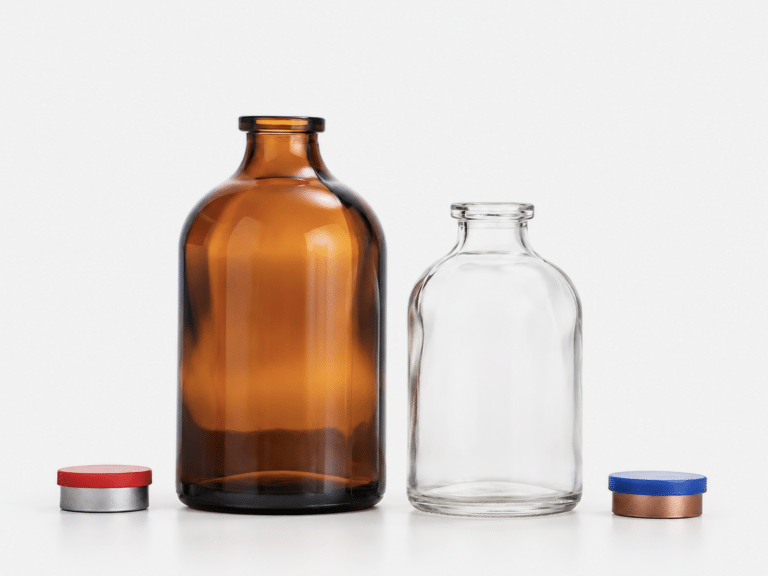
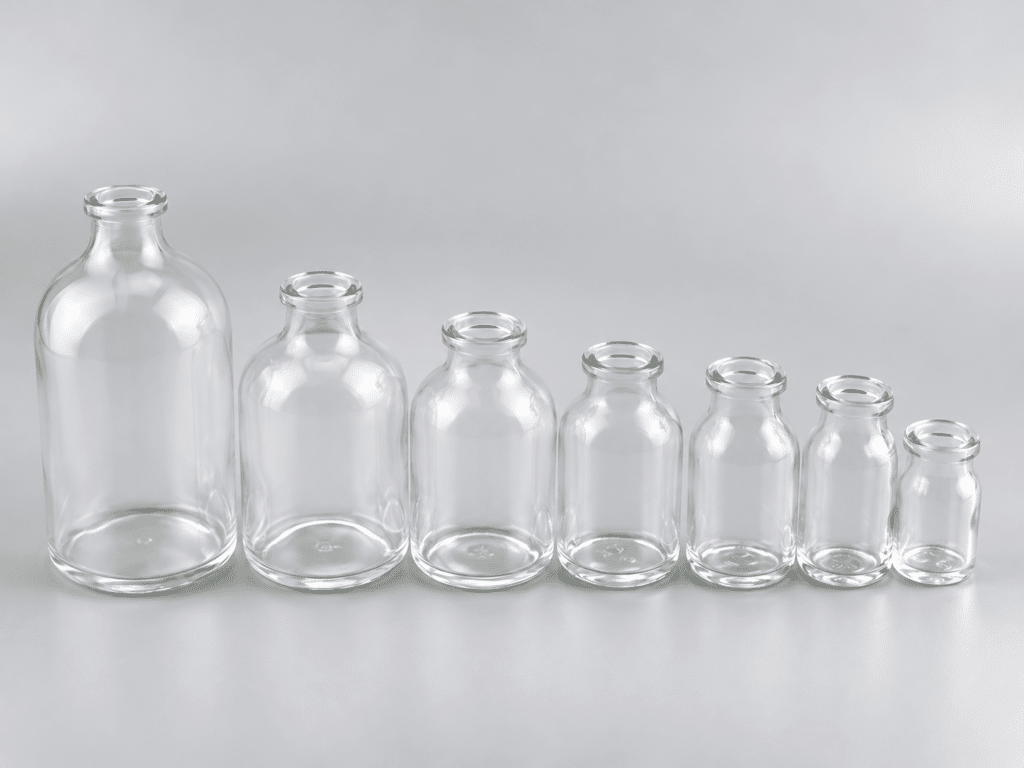
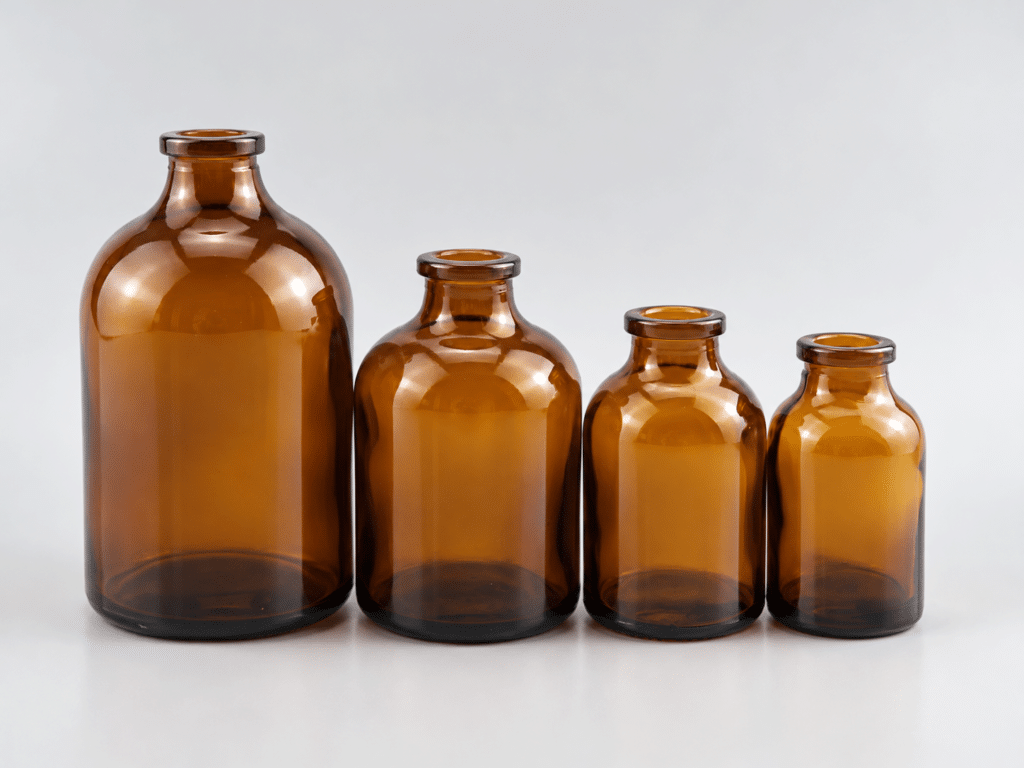
For intravenous infusion packaging, the container forms part of a parenteral packaging system. Infusion bottles and smaller injection vials have different dimensional and processing requirements. Confirm the intended application, fill volume and closure configuration when requesting glass bottles for infusion solutions.
Clear and Amber Infusion Glass Bottles
Infusion glass bottles are available in clear and amber formats. Clear glass infusion bottles allow the contents to be viewed, while amber infusion bottles may be considered where the formulation requires light protection. Bottle colour and glass classification are separate specifications: an amber bottle is not automatically Type I glass, and a clear bottle is not automatically Type II.
For moulded glass infusion bottles—also written as molded glass infusion bottles in US catalogues—request the actual glass classification, bottle drawing and closure dimensions. Pharmaceutical catalogues may place injection, infusion and transfusion bottles together, but glass transfusion bottles require their own application and system evaluation. A similar appearance does not make the formats interchangeable.
Selecting Glass Materials for Infusion Packaging
The selection of glass for an infusion application begins with the characteristics of the formulation. Relevant factors may include the formulation’s chemical properties, intended shelf life, storage conditions and potential interactions with the container.
Glass with higher hydrolytic resistance may be required for certain formulations, but the appropriate material must be determined through an evaluation of the specific product and its requirements.
A bottle should not be considered suitable for an infusion product simply because it is described as pharmaceutical glass. Buyers should confirm the glass classification and request relevant material specifications and supporting information before selecting a container.
Evaluating the Bottle and Closure Assembly
Infusion packaging may use a stoppered and crimp-sealed configuration, depending on the product and application. In such a system, the bottle neck, elastomeric stopper and overseal must be compatible with one another.
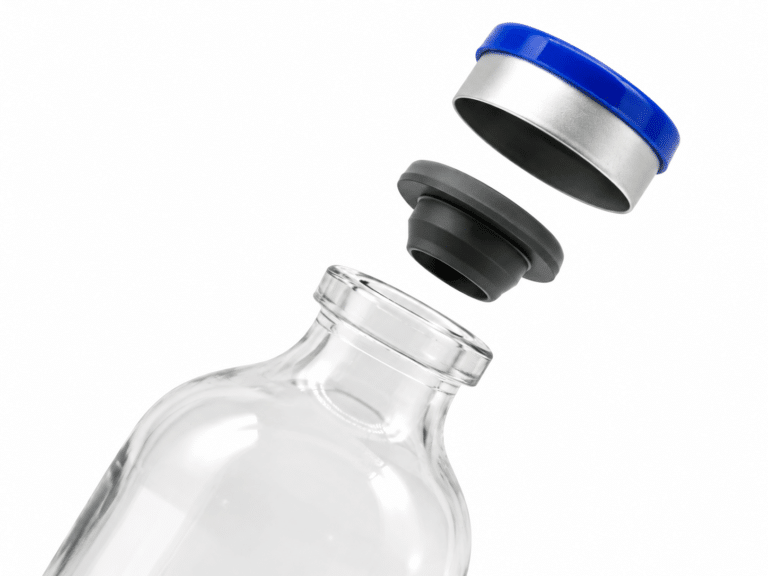
Important specifications include:
- Bottle neck dimensions and finish
- Stopper dimensions and material
- Crimp seal or overseal configuration
- Compatibility with filling and sealing equipment
- Relevant container closure integrity requirements
For sterile pharmaceutical products, maintaining container closure integrity is an essential part of protecting the finished product. The integrity of the assembled system requires appropriate evaluation. An empty glass infusion bottle should not be assumed to be sterile simply because it is intended for pharmaceutical use.
Considering Filling and Processing Conditions
The manufacturing process can also influence pharmaceutical glass bottle selection. Buyers should identify any planned washing, sterilisation or other processing conditions and communicate them during the packaging selection stage.
The high temperatures used in glass manufacturing do not automatically establish a finished bottle’s suitability for every subsequent thermal process.
In addition, the required fill volume should be distinguished from the bottle’s total capacity. Overall dimensions and equipment compatibility should be checked before confirming a packaging specification.
For infusion bottle enquiries, providing formulation requirements, intended fill volume, closure preferences and processing conditions helps establish a clearer technical basis for product selection.
Oral Liquid Glass Bottles and Pharmaceutical Syrup Bottles
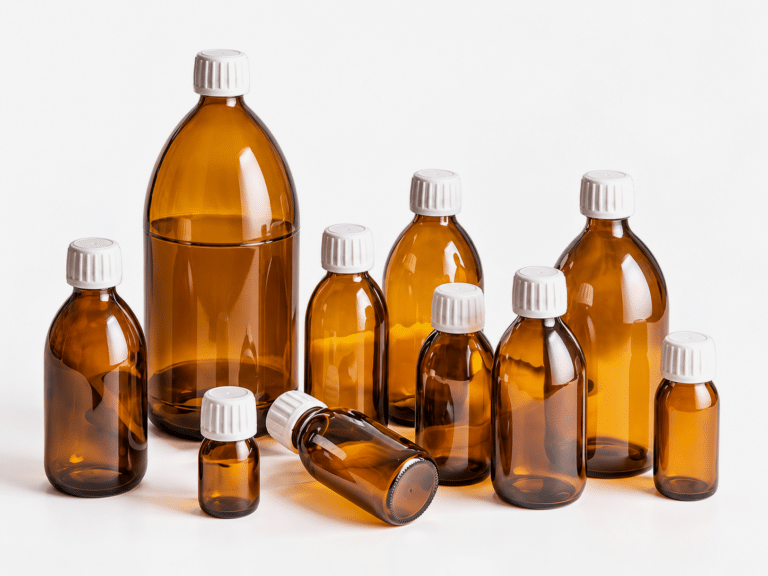
Oral liquid glass bottles are used for packaging liquid pharmaceutical products intended for oral administration. Compared with infusion packaging, oral liquid bottles may place greater emphasis on convenient dispensing, repeated opening and the protection of the formulation during its intended period of use.
The YB pharmaceutical glass range includes oral liquid bottle formats that can be considered according to the required capacity, bottle design and closure configuration.
Oral Medicine Bottles and Glass Syrup Bottles
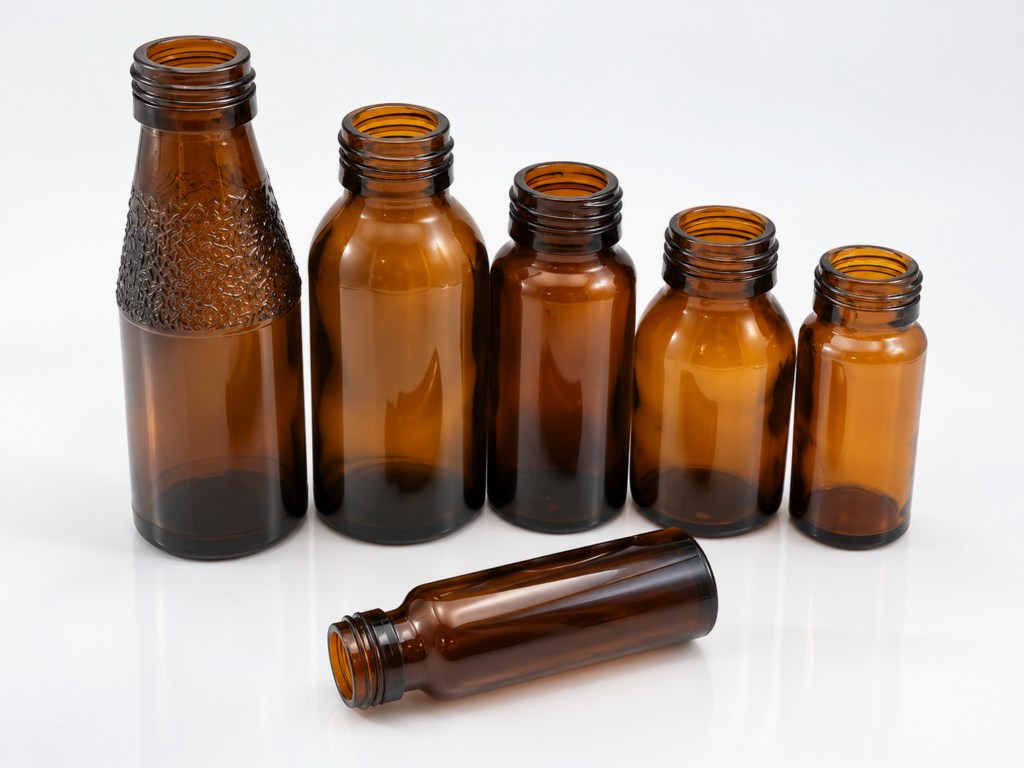
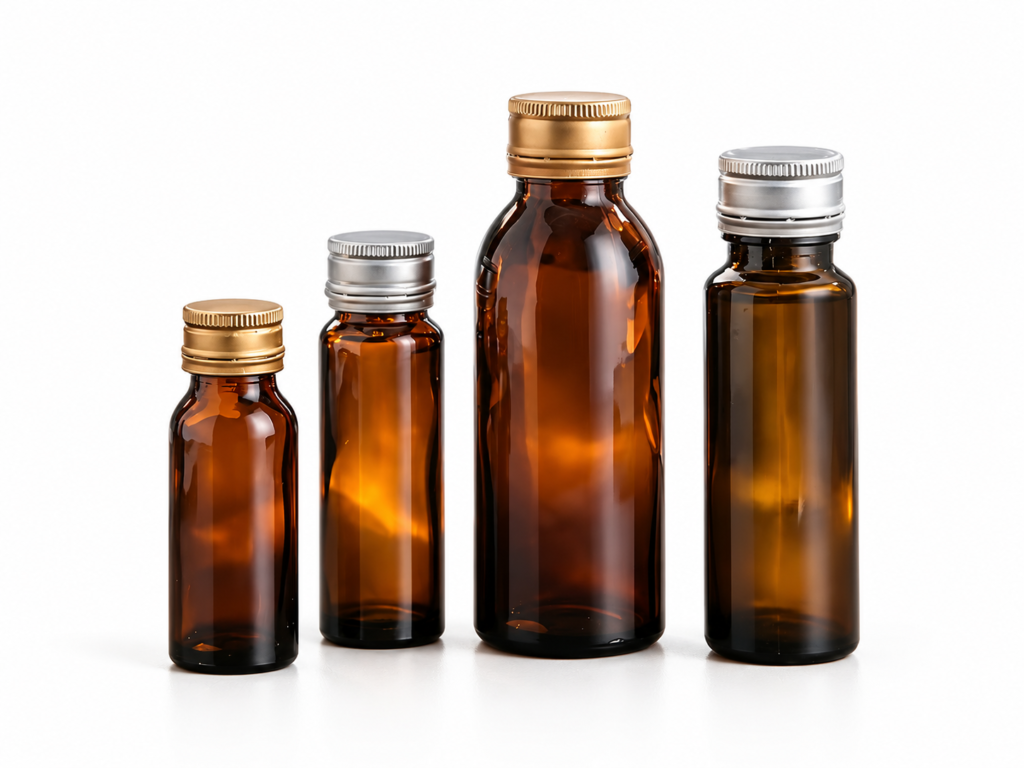
Oral liquid medicine bottles may be used for solutions, syrups or suspensions, subject to formulation and packaging evaluation. Glass syrup bottles is a common catalogue term for bottles intended for syrup packaging; it is not a separate pharmaceutical glass classification. Amber medicine bottles and clear medicine bottles describe the container colour, while screw-neck bottles describe the neck and closure arrangement.
When comparing oral pharmaceutical bottles, consider the liquid’s viscosity and dispensing requirements alongside nominal capacity. A syrup that is poured into a measuring cup and a liquid withdrawn with an oral syringe may require different opening or accessory configurations. Any dosing accessory must be assessed separately; the bottle itself is not a calibrated dose-measuring device.
Amber vs. Clear Pharmaceutical Glass Bottles
Both amber and clear glass are used in pharmaceutical packaging, but their suitability depends on the formulation. Amber glass bottles are commonly considered when a pharmaceutical product requires protection from certain wavelengths of light.
However, amber colour alone does not guarantee that a package provides sufficient light protection for every formulation. The protective performance of the selected container should be evaluated against the product’s specific requirements.
Clear glass bottles provide greater visibility of the contents, which may be useful for products where visual inspection or presentation is important. For light-sensitive formulations, additional protection, such as appropriate secondary packaging, may be necessary.
The choice between amber and clear pharmaceutical glass should therefore be based on product requirements rather than appearance alone.
Screw Neck Medicine Bottles and Oral Liquid Vials
Screw-neck glass bottles are a common format for oral medicines. In screw-thread medicine bottles, the neck finish must match the cap, liner and any dispensing adapter. Amber syrup bottles can be evaluated for light-sensitive syrups, while clear glass syrup bottles may suit formulations with different protection requirements. Assess the complete package against the formulation and intended use.
Smaller oral liquid presentations may use oral liquid glass vials, including tubular oral liquid bottles. These should be specified separately from larger multi-dose medicine bottles, with attention to the opening method, dose presentation and closure. For a glass dropper bottle, evaluate the dropper insert or pipette assembly together with the liquid; a dropper configuration does not by itself establish dosing accuracy.
Matching Bottle Openings to Dispensing Methods
Oral liquid medicines may be dispensed through pouring, measuring accessories or compatible withdrawal devices. The intended method of administration can influence the bottle’s neck design and closure selection.
Before selecting an oral liquid glass bottle, buyers should consider:
- Whether the product is intended for single or multiple uses
- Whether the liquid will be poured or withdrawn
- Whether a measuring cup, spoon or oral syringe is required
- Whether tamper-evident or other closure features are needed
- How the container will be handled during normal use
A bottle’s nominal capacity should not be confused with dose measurement accuracy. For example, a 100 mL glass bottle indicates the container’s nominal volume; it does not establish the accuracy of any measuring accessory used with the product.
Where a dosing device is required, that device should be selected and assessed for its intended purpose.
Reviewing the Complete Oral Liquid Bottle Specification
A useful oral liquid glass bottle specification includes more than capacity. Buyers should also review the neck finish, closure material, liner configuration, bottle dimensions and available label area.
These details can affect filling operations, closure application, product presentation and the user’s ability to dispense the medicine. For products that require shaking before use or have other specific handling instructions, the packaging configuration should also be reviewed against those requirements.
Glass Capsule Bottles Tablet Bottles and Wide Mouth Containers
Glass capsule bottles are another important category of pharmaceutical glass packaging. These containers are used for solid dosage forms such as capsules and may also be considered for tablets or pills, depending on the product and packaging requirements.
Unlike narrow-neck liquid bottles, glass capsule bottles often feature wider openings to facilitate filling and product removal.
Glass Pill Bottles and Wide Mouth Tablet Containers
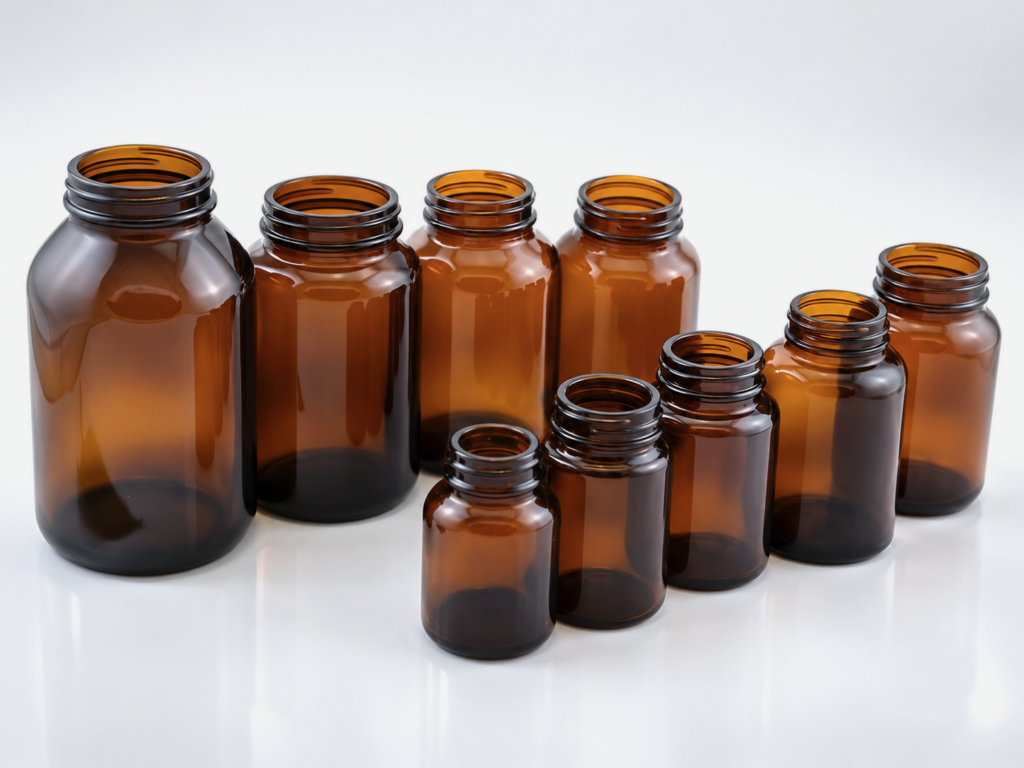
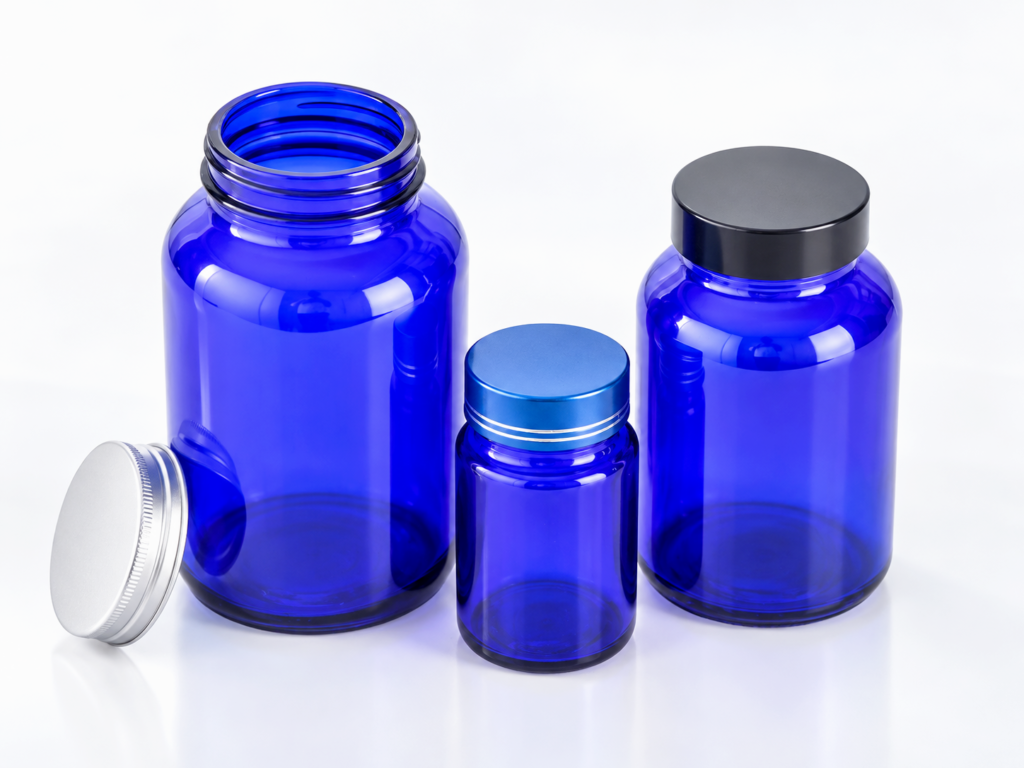
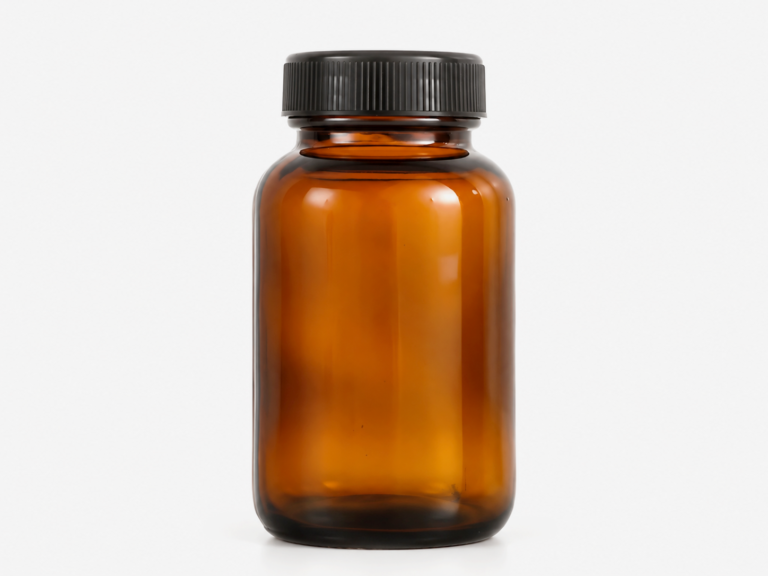
Glass capsule bottles, glass tablet bottles and glass pill bottles describe solid-dose packaging formats. Tablet containers may also be supplied as glass tablet jars or wide-mouth glass jars. Their larger openings can help with filling and product removal, while bottle capacity, closure design and internal space must be checked against the actual capsule or tablet.
A wide opening can support filling and product removal, while the closure, liner and any inner seal must match the selected neck finish. Amber glass tablet bottles may be considered when light protection is required, but colour alone cannot establish suitability. Blue glass, shown among the bottle examples, should likewise be assessed against product-specific requirements rather than assumed to provide equivalent protection.
Amber Tablet Bottles and Screw Thread Tablet Jars
Amber glass tablet bottles and amber capsule bottles combine a solid-dose container format with a colour option that may support the required light protection. Clear glass tablet bottles provide visibility of the contents. Regardless of colour, confirm the glass specification, target tablet or capsule count, usable internal space and closure requirements.
For screw-thread tablet jars and wide-neck glass bottles, neck diameter and thread dimensions affect closure selection and filling-line compatibility. Some tablet containers use an impact neck finish with a snap-on closure instead of a screw cap. Specify the required neck and closure design during an enquiry; an impact-neck jar and a screw-thread bottle require different closure components.
Selecting Bottle Capacity for Capsules
One common question when selecting a glass capsule bottle is how many capsules a particular bottle can hold. However, a bottle’s capacity in millilitres does not correspond to a fixed number of capsules.
The actual capsule count depends on several factors, including:
- Capsule size and dimensions
- Target quantity per bottle
- Capsule shape and packing arrangement
- Available internal bottle space
- Additional packaging components, if required
For example, two capsule products with the same target count may require different bottle capacities because their capsule dimensions differ.
The most reliable approach is to evaluate the actual capsules or representative samples in the proposed bottle before confirming the final packaging size. When requesting glass capsule bottles, buyers should provide both the capsule dimensions and the required quantity per container.
Understanding Moisture Protection
Moisture protection is an important consideration for many solid pharmaceutical products. Although glass provides an effective barrier through the container body, the performance of the finished package also depends on the closure and any associated sealing components.
For products that are sensitive to moisture, buyers may need to evaluate closure design, liner selection, inner seals or other protective components. Desiccants may also be considered where appropriate, but their use should be based on the product’s requirements and the packaging system’s design.
Repeated opening and closing can also affect the conditions experienced by the contents during normal use. Consequently, moisture protection should be evaluated for the complete glass bottle and closure system rather than attributed to the glass material alone.
Balancing Filling Efficiency and User Access
The opening diameter, bottle height and cap configuration can influence both manufacturing operations and everyday handling. A wide-mouth glass bottle may facilitate capsule filling and removal, while the overall dimensions must remain compatible with the intended filling equipment and packaging process.
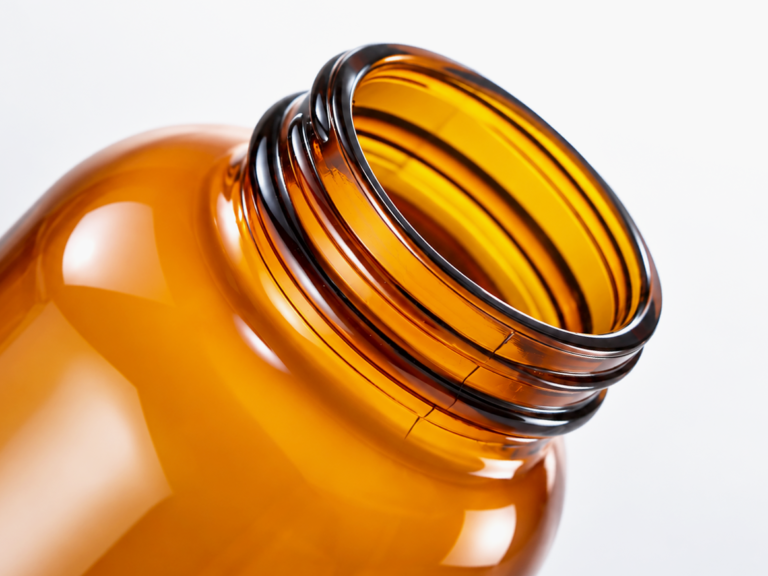
Buyers should also consider label dimensions, closure application and any required protective components. A suitable glass capsule bottle should accommodate the intended capsule quantity while supporting efficient filling, secure closure and practical product access.
How to Choose the Right Pharmaceutical Glass Bottle
The three pharmaceutical glass bottle categories discussed above have different primary considerations. A useful starting point is to compare the intended application with the material, capacity and closure requirements of the proposed container.
Pharmaceutical Glass Bottle Type | Main Selection Considerations | Information to Prepare |
Glass infusion bottles | Glass classification, formulation compatibility, closure integrity and processing conditions | Formulation requirements, fill volume, material specification and closure configuration |
Oral liquid glass bottles | Light protection, dispensing method, bottle opening and closure design | Product characteristics, fill volume, dispensing requirements and closure preferences |
Glass capsule bottles | Capsule capacity, moisture protection, opening diameter and storage conditions | Capsule dimensions, target count, closure requirements and any additional components |
Regardless of the bottle category, the selection process should begin with the pharmaceutical product and its intended use. A practical packaging enquiry should identify the required container format, nominal capacity, material expectations, closure preferences and relevant manufacturing or storage conditions.
For regulated pharmaceutical applications, buyers should also establish which material specifications, quality documents and supporting evaluations are required for their destination market and intended product.
These considerations help turn a general request for pharmaceutical glass bottles into a more clearly defined packaging specification.
Sourcing YB Pharmaceutical Glass Bottles
YB pharmaceutical glass covers a range of pharmaceutical packaging formats, including infusion bottles, oral liquid and syrup bottles, capsule and tablet containers, injection vials, ampoules and cartridges. Buyers can discuss these formats with Yuebo as a pharmaceutical glass packaging supplier and define the specifications required for their project.
These bottle categories serve different purposes, but they share a common selection principle: the glass container must be considered in relation to the formulation, closure system and intended packaging process.
For pharmaceutical glass packaging enquiries, Yuebo can discuss the required bottle category and project specifications to help identify relevant product options.
Buyers should specify their documentation requirements and destination market when making an enquiry. The availability and scope of certificates and supporting product documentation should be confirmed for the selected product, as requirements may differ between applications and regulatory environments.
What to Ask a Pharmaceutical Glass Bottle Supplier
A useful supplier comparison goes beyond price and bottle appearance. Ask for a bottle drawing, nominal and brimful capacity where available, neck-finish dimensions, the specified glass grade and the proposed closure configuration. These details help distinguish a general pharmaceutical packaging quotation from an option that can be assessed against the actual product and filling line.
For bulk pharmaceutical glass bottle enquiries, also discuss order quantity, sample availability, lead time, transport packaging and the documentation required for the destination market. These are project questions, not assumptions about standard service levels. Any specific test report, certificate or pharmaceutical compliance statement should be checked for its product scope and applicability.
When contacting Yuebo about pharmaceutical glass bottles, it is helpful to provide:
- Intended pharmaceutical application
- Required bottle category and capacity
- Preferred glass material or classification
- Closure and sealing requirements
- Relevant filling or processing conditions
- Destination market and documentation requirements
- Estimated order quantity
Providing these details helps clarify the packaging requirements and supports a more efficient product selection discussion.
Conclusion
Selecting the right pharmaceutical glass bottle requires more than choosing a suitable shape or nominal capacity. Glass composition, hydrolytic resistance, formulation characteristics, closure compatibility and processing conditions all contribute to the suitability of the finished packaging system.
Glass infusion bottles, oral liquid glass bottles and glass capsule bottles each present different technical and practical considerations. Understanding these differences helps pharmaceutical buyers prepare clearer specifications and evaluate packaging options more effectively.
For businesses exploring YB pharmaceutical glass solutions, defining the intended application and packaging requirements is the first step toward identifying an appropriate glass bottle configuration.
Looking for a pharmaceutical glass bottle supplier for an infusion, oral liquid or solid-dose packaging project? Contact Yuebo with your fill volume or capsule count, glass specification, closure requirements and estimated order quantity to discuss relevant bottle options and supporting documentation.


